

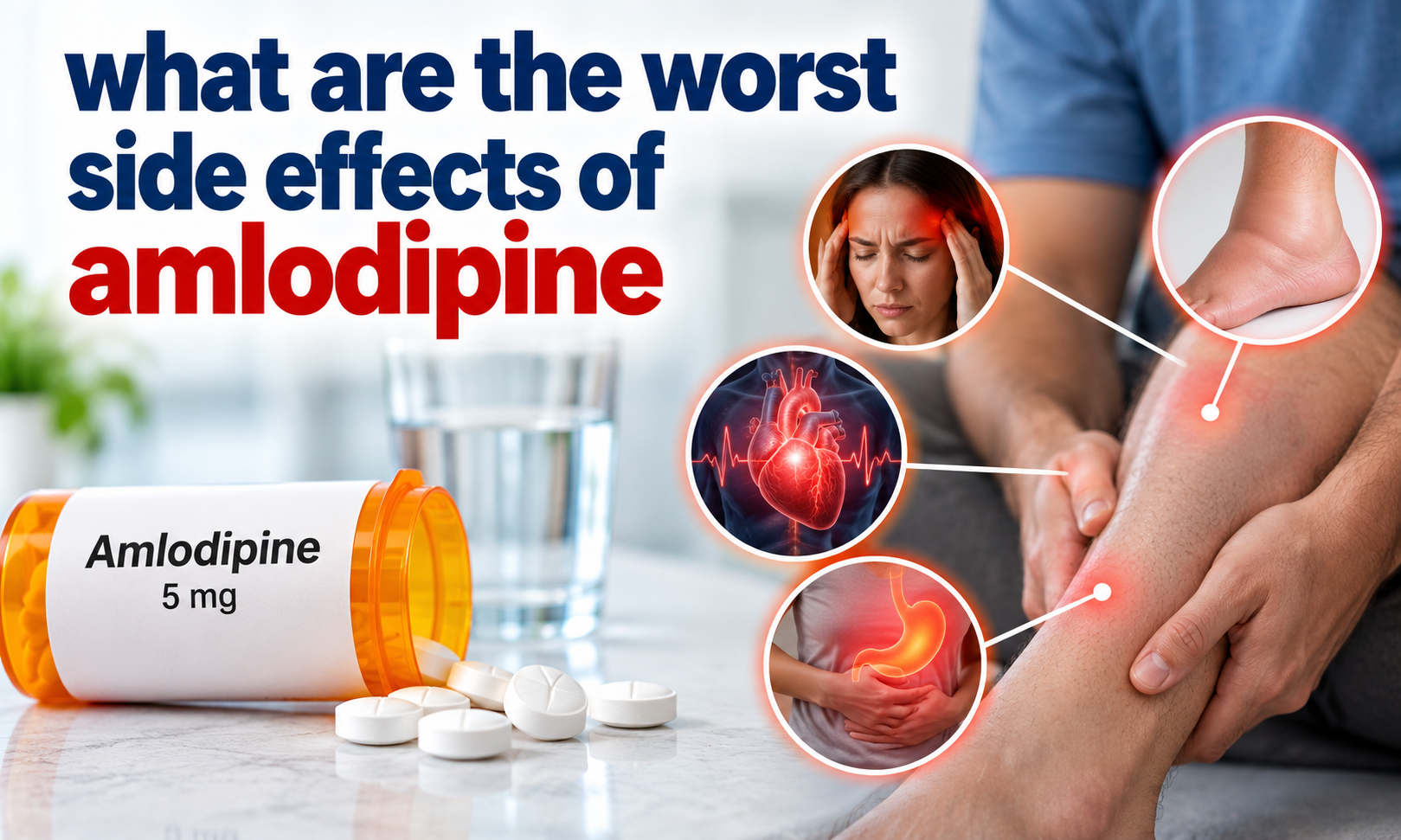
If you are wondering what are the worst side effects of amlodipine, the most important ones are uncommon but potentially serious reactions such as very low blood pressure, fainting, worsening chest pain, a fast or irregular heartbeat, severe allergic reactions, and symptoms that may indicate a heart attack. Most people do not experience these complications, but knowing the warning signs can help you decide when to call your doctor and when to seek emergency care.
Amlodipine is a calcium channel blocker commonly prescribed in the United States for high blood pressure and certain forms of coronary artery disease. Healthline’s amlodipine overview notes that mild effects such as ankle swelling, dizziness, fatigue, flushing, and nausea are more common than serious reactions.
What Are the Most Serious Side Effects of Amlodipine?
Serious side effects are not common, but several require prompt medical attention. The urgency depends on the symptom and how severe it is.
| Serious Problem | Possible Warning Signs | What to Do |
| Worsening angina or possible heart attack | New or more severe chest pain, pressure, shortness of breath, sweating, nausea, pain spreading to the arm, jaw, back, or shoulder | Call 911 for possible heart attack symptoms |
| Severe low blood pressure | Fainting, extreme dizziness, weakness, confusion, inability to stand safely | Seek urgent medical care, especially after fainting |
| Serious allergic reaction | Swelling of the face, lips, tongue, or throat; trouble breathing; widespread hives | Call 911 |
| Abnormal heartbeat | Rapid, pounding, or irregular heartbeat with dizziness, chest pain, fainting, or shortness of breath | Seek prompt or emergency care depending on severity |
| Severe swelling or fluid retention | Rapidly worsening leg swelling, sudden weight increase, or swelling with shortness of breath | Contact a healthcare professional promptly; emergency care if breathing is affected |
Can Amlodipine Make Chest Pain Worse?
Rarely, chest pain can become more frequent or more severe after starting amlodipine or after a dose increase, particularly in people with severe obstructive coronary artery disease. The prescribing information for amlodipine warns that worsening angina and acute myocardial infarction have occurred in this setting.
Do not assume new chest pain is simply a medication side effect. Chest pressure or pain accompanied by shortness of breath, sweating, nausea, faintness, or pain spreading to the arm, jaw, shoulder, or back should be treated as a possible medical emergency.
Can Amlodipine Cause Blood Pressure to Drop Too Low?
Amlodipine lowers blood pressure by relaxing blood vessels. Most patients do not develop dangerously low blood pressure, but excessive lowering can happen, especially when amlodipine is combined with other blood pressure medicines, during dehydration, or in people who are particularly sensitive to treatment.
Symptoms may include dizziness, lightheadedness, weakness, blurred vision, or fainting. Sit or lie down if you feel faint to reduce the risk of a fall. A single mild dizzy spell may not be an emergency, but fainting, confusion, persistent severe dizziness, or symptoms of shock require urgent medical attention.
According to MedlinePlus, serious symptoms that warrant immediate medical attention include more frequent or more severe chest pain, a rapid or irregular heartbeat, and fainting.
Is Leg and Ankle Swelling Dangerous?
Swelling of the ankles, feet, or lower legs is one of the best-known amlodipine side effects. It is usually caused by fluid shifting into tissues as small blood vessels dilate rather than by kidney failure or simple fluid overload.
In clinical trials, edema became more common as the dose increased. FDA prescribing information reported edema in about 1.8% of patients taking 2.5 mg, 3.0% at 5 mg, and 10.8% at 10 mg, compared with 0.6% with placebo.
Mild ankle swelling is often uncomfortable rather than dangerous. However, rapidly worsening swelling, swelling on only one side, severe pain, sudden weight gain, or swelling accompanied by shortness of breath should be evaluated promptly because another medical problem may be responsible.
Can Amlodipine Cause a Serious Allergic Reaction?
A serious allergic reaction is rare, but it is possible. Emergency warning signs include swelling of the face, lips, tongue, or throat, trouble breathing or swallowing, widespread hives, or a feeling that the throat is closing.
These symptoms can indicate angioedema or anaphylaxis. Call 911 rather than waiting to see whether the reaction improves.
What Heart Rhythm Problems Can Occur?
Palpitations are a recognized side effect of amlodipine and are usually not dangerous by themselves. Rare reports have included tachycardia, bradycardia, atrial fibrillation, and other rhythm disturbances, although not every reported event can be proven to have been caused by the medicine.
A racing or irregular heartbeat becomes more concerning when it occurs with fainting, severe dizziness, chest pain, or shortness of breath. Those combinations need prompt medical assessment.
What Are the Common Side Effects?
The side effects people encounter most often are generally much less dangerous than the problems above. Common or recognized reactions include ankle swelling, dizziness, flushing, palpitations, tiredness, nausea, abdominal discomfort, and sleepiness.
| Side Effect | Usually Serious? | When to Contact a Clinician |
| Ankle or foot swelling | Usually not | If severe, rapidly worsening, painful, one-sided, or associated with shortness of breath |
| Dizziness | Usually not | If persistent, severe, causing falls, or associated with fainting |
| Flushing | Usually not | If severe or accompanied by breathing difficulty or facial swelling |
| Palpitations | Often not | If prolonged or accompanied by chest pain, fainting, or shortness of breath |
| Fatigue or drowsiness | Usually not | If extreme, persistent, or interfering with normal activities |
| Nausea or abdominal discomfort | Usually not | If severe, persistent, or accompanied by repeated vomiting |
Does the Dose Affect Side Effects?
Some amlodipine side effects are dose-related. In FDA clinical trial data, edema, flushing, and palpitations became more frequent as the dose increased from 2.5 mg to 10 mg per day. This is one reason clinicians often begin with a lower dose and increase it only when needed.
Do not lower the dose, split tablets, or stop treatment on your own. Uncontrolled high blood pressure and coronary artery disease carry important risks, so medication changes should be made with the prescribing clinician.
Which Drug Interactions Matter?
Amlodipine can interact with other medicines. Combining several blood pressure-lowering drugs can increase dizziness or hypotension. Amlodipine also increases exposure to simvastatin, and US prescribing information recommends limiting simvastatin to 20 mg daily in patients taking amlodipine.
Amlodipine may also increase levels of tacrolimus or cyclosporine in some patients, which may require monitoring. Always provide your pharmacist and prescriber with a complete medication and supplement list.
What Happens in an Amlodipine Overdose?
Taking too much amlodipine can cause dangerously low blood pressure, dizziness, fainting, a rapid heartbeat, and in severe cases shock. Because amlodipine has a long duration of action, overdose symptoms may require prolonged medical monitoring.
In the United States, call Poison Control at 1-800-222-1222 for suspected overdose. If the person collapses, has trouble breathing, has a seizure, or cannot be awakened, call 911 immediately.
When Should You Call the Doctor Instead of 911?
Contact the prescribing clinician promptly for bothersome ankle swelling, persistent dizziness, ongoing palpitations, unusual fatigue, or other new symptoms that do not appear to be an emergency. A dose adjustment or medication review may help.
Call 911 for severe chest pain, symptoms of a heart attack, severe breathing difficulty, facial or throat swelling, fainting with ongoing symptoms, or signs of severe low blood pressure.
Frequently Asked Questions
What is the most dangerous side effect of amlodipine?
There is no single worst effect for every patient, but severe low blood pressure, worsening angina or possible heart attack, serious allergic reactions, fainting, and serious rhythm symptoms require urgent attention.
Is ankle swelling from amlodipine dangerous?
Mild symmetrical ankle swelling is common and usually not dangerous. Rapidly worsening swelling, one-sided swelling, severe pain, or swelling with shortness of breath needs medical evaluation.
Can amlodipine damage the heart?
Amlodipine is prescribed to lower blood pressure and treat coronary artery disease. Rarely, people with severe coronary disease may develop worsening angina or a heart attack after starting treatment or increasing the dose.
Can amlodipine cause kidney failure?
Kidney failure is not a typical direct side effect of amlodipine. However, severe hypotension from any cause can reduce blood flow to organs. New swelling or kidney concerns should be assessed rather than attributed to the drug automatically.
Should I stop amlodipine if my ankles swell?
Do not stop it on your own. Contact your clinician, who can assess the severity, rule out other causes, and decide whether the dose or medication should be changed.
What should I do if I feel dizzy after taking amlodipine?
Sit or lie down until the feeling passes and rise slowly. If dizziness is severe, persistent, causes fainting, or occurs with chest pain or breathing problems, seek medical care.
Bottom Line
Most amlodipine side effects are mild, with ankle swelling, dizziness, flushing, fatigue, nausea, and palpitations among the better-known reactions. The most concerning effects are much less common and include severe hypotension, fainting, worsening chest pain, possible heart attack, serious allergic reactions, and symptomatic abnormal heart rhythms.
Do not stop amlodipine suddenly simply because you notice a side effect. Contact your healthcare professional for non-emergency problems, and call 911 for severe chest pain, major breathing difficulty, facial or throat swelling, fainting with ongoing symptoms, or other signs of a medical emergency.
