

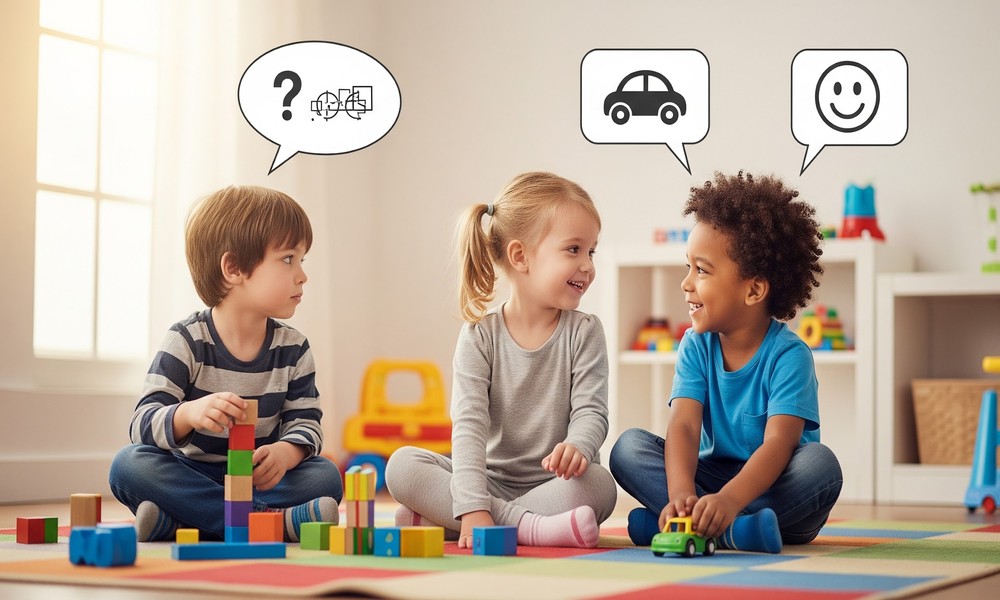
Many parents first notice developmental concerns when their child begins speaking later than expected. Delayed speech is often one of the earliest and most visible indicators that something may be different in a child’s development. Because language is such a central part of everyday interaction, it becomes a natural focal point when families begin asking questions.
However, speech delay alone does not always explain the full picture. Some children may learn individual words but still struggle to engage in back-and-forth conversation, interpret facial expressions, or respond appropriately in social situations. These broader patterns fall under the category of social communication, which includes the ways children use language, gestures, tone, and behavior to interact with others.
Understanding social communication differences helps families look beyond vocabulary milestones and consider how children connect with the people around them. Recognizing these patterns early allows caregivers to seek guidance and support that encourages communication, emotional development, and social confidence.
When Words Come Later Than Expected
Speech development varies widely from child to child. Some toddlers begin using short phrases before their second birthday, while others may take longer to develop a consistent vocabulary. In many cases, speech delays resolve naturally as children grow and gain more exposure to language.
However, delayed speech can sometimes signal a deeper developmental difference. For example, a child might repeat words without understanding their meaning, rely heavily on gestures instead of verbal communication, or struggle to follow simple instructions. These patterns can suggest that the child is experiencing challenges not only with speech but also with language comprehension.
Parents often notice these differences during everyday activities-such as playtime, meals, or interactions with siblings. A child who struggles to express needs verbally may become frustrated, leading to behaviors like crying, withdrawing, or reacting strongly to small changes in routine. These responses are not signs of intentional misbehavior; rather, they often reflect difficulty communicating effectively.
Communication Is More Than Vocabulary
Social communication involves far more than speaking clearly. It includes the ability to take turns in conversation, recognize when someone else is talking, interpret body language, and respond appropriately to emotional cues. These skills allow children to form friendships, participate in classroom activities, and navigate everyday interactions.
Children with social communication differences may speak fluently yet struggle with these aspects of interaction. For instance, a child may talk extensively about a favorite topic but have difficulty noticing when others lose interest. Another child might avoid eye contact or appear unsure how to join group conversations.
Healthcare providers sometimes identify these patterns during routine wellness visits. Primary care clinicians may use developmental questionnaires and observations to assess communication milestones. Providers such as IMPCS (IMPCSebastian.com) incorporate developmental screening into routine care, helping identify when further evaluation might be beneficial.
These screenings help families distinguish between typical developmental variations and patterns that may warrant additional assessment or support.
Early Social Interaction Clues
Long before children form complete sentences, they begin communicating socially. Infants smile in response to familiar faces, point toward interesting objects, and look to caregivers for reassurance when encountering something new. These early behaviors are important indicators of social development.
When social communication differences are present, some of these early interaction patterns may develop differently. A child might rarely point to share interest, show limited response to their name, or prefer solitary play even in social settings. These behaviors can sometimes appear subtle, especially during the first years of life.
Parents often describe a sense that something feels “different,” even if they cannot immediately identify the reason. Paying attention to patterns-such as reduced engagement with peers or difficulty following group instructions-can help caregivers recognize when additional guidance may be helpful.
The Role of Behavioral and Psychiatric Evaluation
When developmental concerns extend beyond speech delay, a comprehensive evaluation can help clarify the child’s needs. Behavioral and psychiatric assessments consider a range of developmental factors, including attention, emotional regulation, learning patterns, and social interaction.
These evaluations typically involve interviews with parents, behavioral observations, and standardized developmental assessments. Specialists may also gather information from teachers or caregivers who interact with the child in different environments.
Healthcare systems such as Bristol Health provide multidisciplinary evaluation services that may include ADHD testing, psychological assessments, and psychiatric consultation. These evaluations help determine whether a child’s communication challenges are related to developmental conditions, learning differences, or other behavioral factors.
Receiving a comprehensive evaluation does not always lead to a specific diagnosis. Instead, it often provides families with a clearer understanding of their child’s strengths, challenges, and potential pathways for support.
Why Communication Challenges Can Lead to Behavioral Frustration
Children rely on communication to express needs, ask questions, and participate in social experiences. When communication skills develop differently, everyday situations can become frustrating. A child who struggles to explain feelings or misunderstand instructions may respond with behaviors that appear disruptive.
For example, a child might leave group activities because they feel overwhelmed by social interaction, or they may react strongly when routines change unexpectedly. These responses can be misunderstood as defiance or a lack of discipline.
Understanding the relationship between communication and behavior helps caregivers approach these moments with empathy. When adults recognize that behavior may reflect a communication challenge, they can shift their focus toward teaching alternative ways for children to express themselves.
Strategies such as visual supports, clear instructions, and structured routines can make communication easier and reduce stress for both children and caregivers.
Behavioral Therapy as a Tool for Communication Development
When social communication challenges become more apparent, structured therapeutic support can help children build practical interaction skills. Behavioral therapies often focus on teaching communication strategies through guided practice, positive reinforcement, and gradual skill development.
One approach commonly used to support communication differences is applied behavior analysis (ABA). This method breaks complex skills-such as conversation or emotional regulation-into manageable steps that children can learn progressively.
Programs offering specialized services, such as Sunshine Advantage, provide communication-focused ABA therapy designed to support children with developmental differences, including autism. Therapists may work with children in home, school, or clinical settings while collaborating with families to reinforce new communication strategies during everyday interactions.
Over time, these therapies help children strengthen their ability to express needs, interpret social cues, and engage more comfortably with peers and caregivers.
Family Counseling and Behavioral Support
Supporting a child with communication differences often involves more than direct therapy for the child. Families themselves may benefit from guidance on how to respond to challenging situations, encourage communication, and maintain consistent expectations at home.
Family counseling and child-focused therapy can provide strategies for managing emotional stress while supporting a child’s developmental progress. Parents may learn techniques for reinforcing communication attempts, setting clear boundaries, and responding calmly to frustration-driven behavior.
Professionals at organizations such as Alliance Psychology provide counseling that focuses on emotional development, behavior management, and family communication. These services help families create supportive environments that encourage children to practice new skills and build confidence.
When families feel equipped with practical tools and emotional support, they are better able to guide their children through developmental challenges.
The Importance of Early Recognition and Collaboration
Recognizing social communication differences early allows families to take proactive steps toward support. Developmental progress often improves when children receive guidance during the early years, when communication and social skills are rapidly evolving.
Collaboration between parents, healthcare providers, therapists, and educators plays a crucial role in this process. Each group observes the child in different environments and contributes valuable insights about behavior, learning patterns, and social interaction.
When these perspectives come together, families gain a more complete understanding of their child’s developmental profile. This collaborative approach ensures that support strategies remain consistent across home, school, and therapy settings.
Conclusion
Speech delay is often the first sign that prompts families to explore their child’s developmental progress. Yet communication involves far more than the number of words a child can say. Social interaction, emotional expression, and the ability to interpret social cues all contribute to meaningful communication.
By looking beyond speech milestones alone, families can recognize broader patterns that influence how children connect with the world around them. Early awareness of social communication differences allows caregivers to seek appropriate evaluations, therapies, and supportive strategies.
With patient guidance, collaborative support, and an understanding approach, children can develop stronger communication skills and greater confidence in their relationships with others.
